01
OVERVIEW
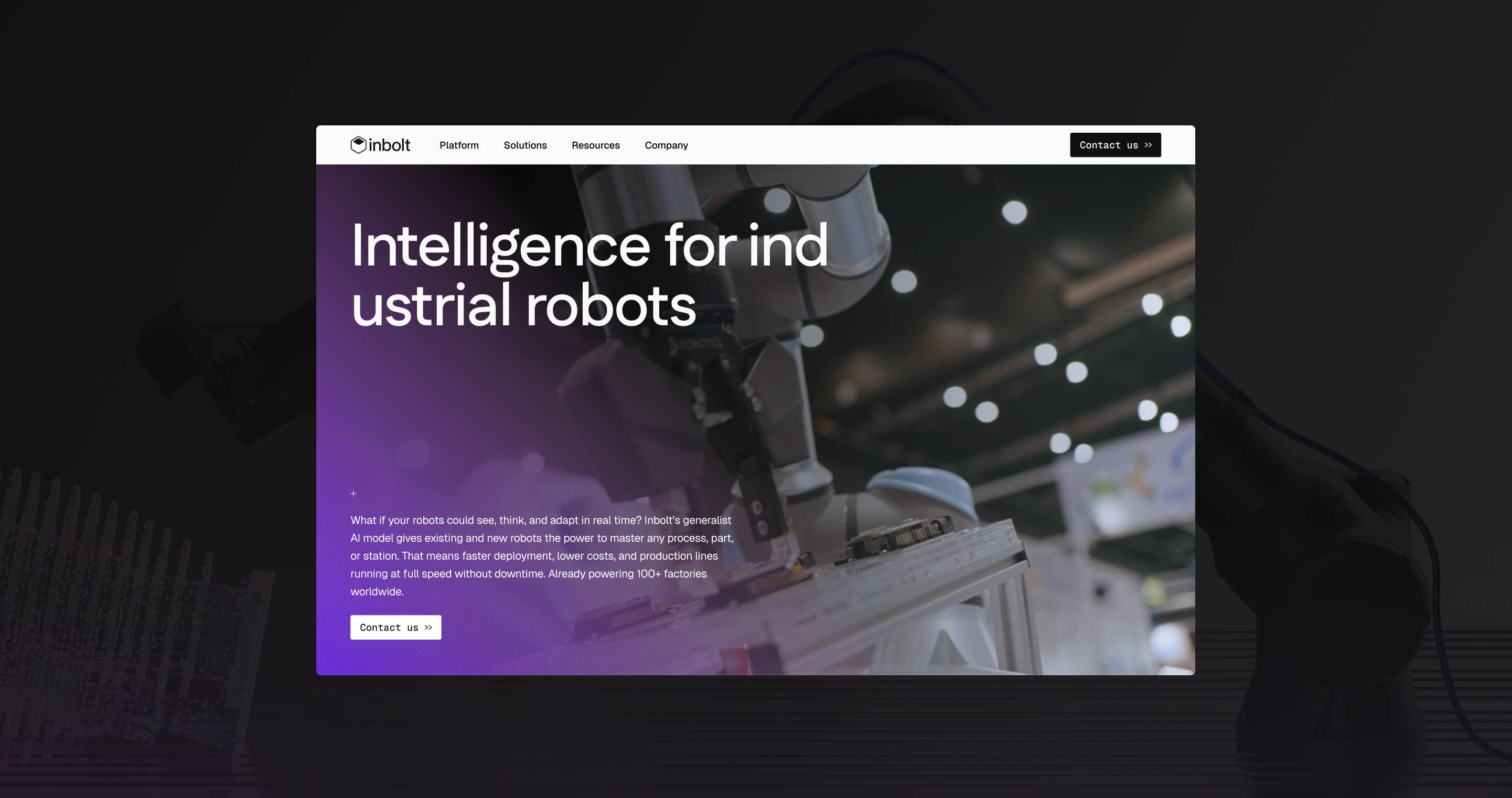
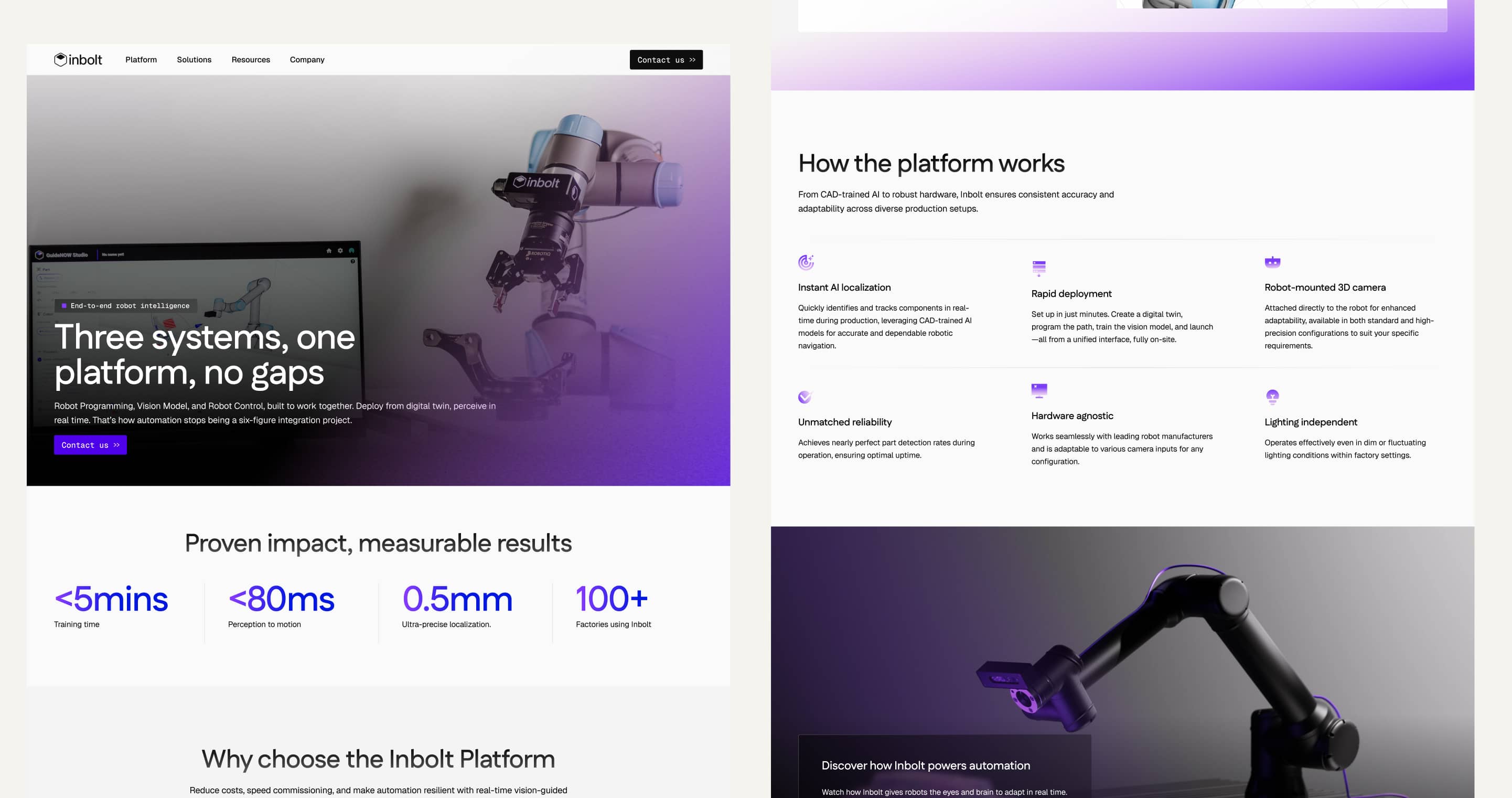
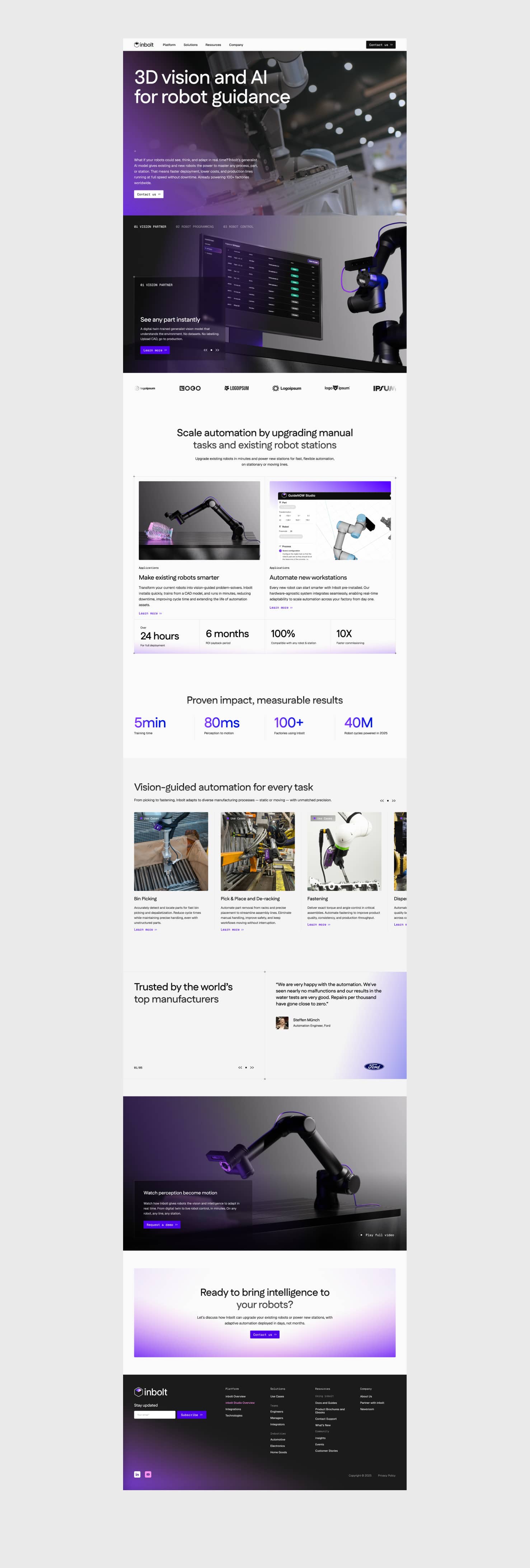
Inbolt builds AI-powered vision guidance systems for industrial robots. Their platform, GuideNOW, gives robots the ability to see, think, and adapt in real time: trained on CAD models, deployed in minutes, and already running in 100+ factories worldwide including Stellantis, Ford, and Toyota. The product is technically precise and the results are measurable. The challenge was a website that didn't yet reflect either.
Inbolt came to us for a redesign that would position them as the definitive force in vision-guided robotics. The brand color palette was established, but the visual language needed to evolve: more personality, more precision, more presence. Our job was to bring that to life without getting in the way of what already communicates best on their site — the product itself.
02
PAINPOINTS / CHALLENGEGS
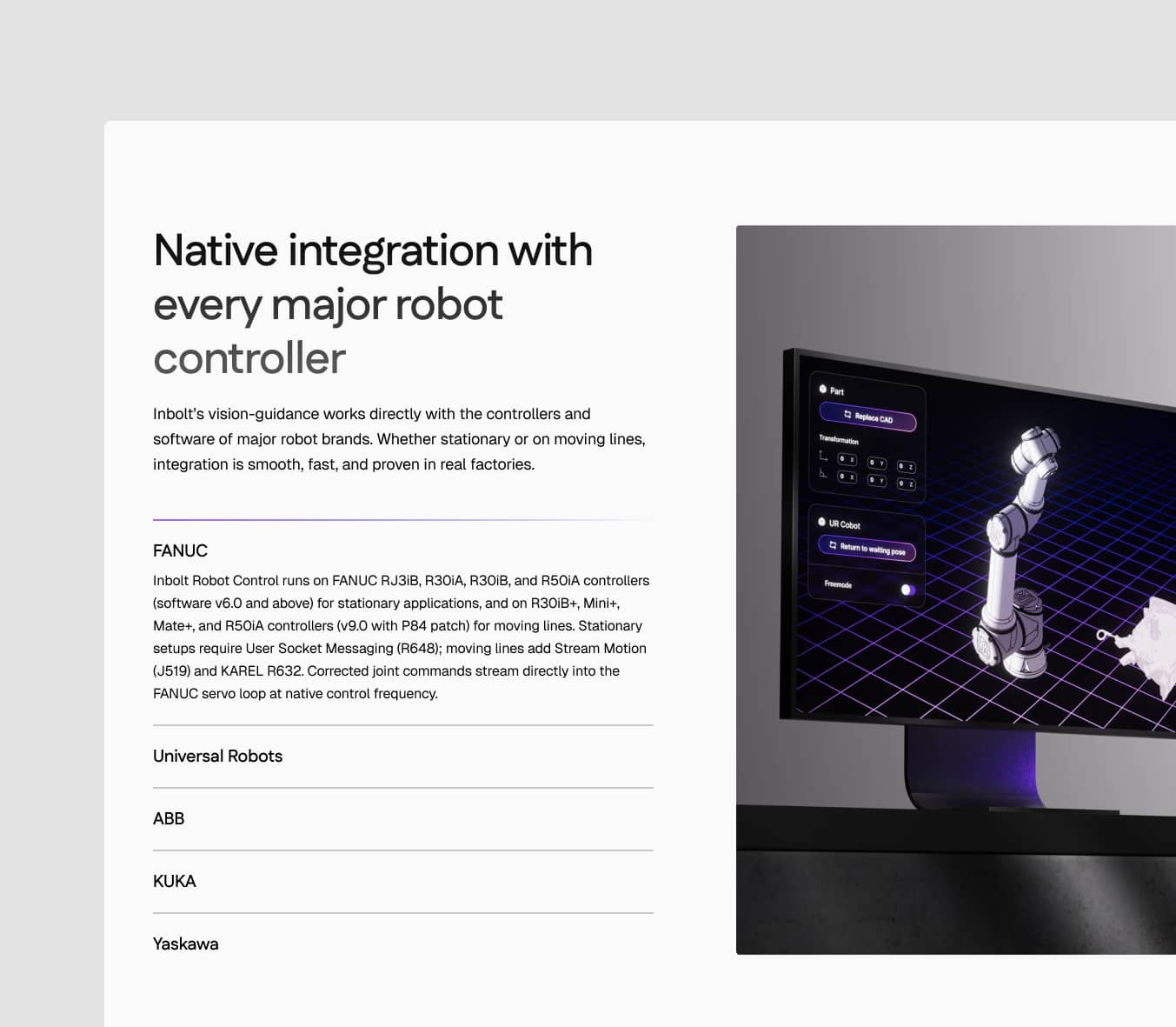
The previous site underserved a technically sophisticated audience. Engineers, automation managers, and systems integrators need to quickly assess whether a solution is production-proven, compatible with their existing setup, and fast to deploy. The site wasn't answering those questions efficiently. Visually, the brand had the right foundations but lacked a design language distinctive enough to stand apart from a crowded field of vision and robotics vendors all making similar claims. The opportunity was to let the product do the talking, while giving it a visual context worthy of the technology.
03
GOALS
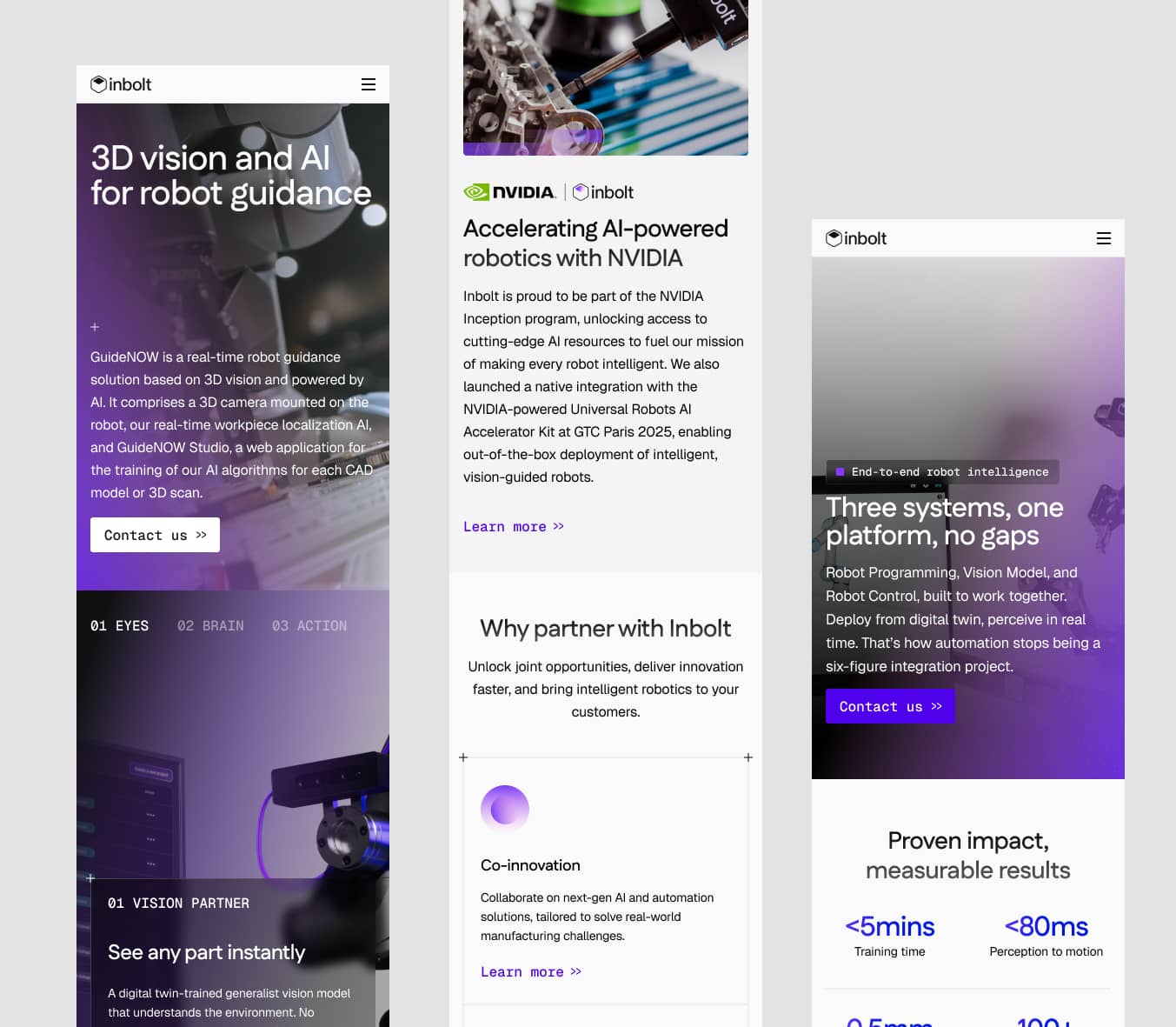
We focused on three outcomes. First, build a visual language that expresses Inbolt's core brand personality: precise, bold, and future-focused, without losing the human and approachable tone that makes them accessible to factory floor engineers as much as enterprise buyers. Second, restructure the site so that every user type, from innovation managers evaluating ROI to integrators assessing compatibility, could quickly find the proof points relevant to them. Third, create a system that lets the product imagery and video take center stage, with every design decision in service of that content rather than competing with it.
04
DESIGN PROCESS
We started with a thorough discovery phase: industry analysis, competitive audit, and persona development across three distinct user types. The robotics automation market is moving fast, buyers need proof not promises, and Inbolt's differentiation is real-world deployment at scale. That insight shaped everything: the site needed to lead with credibility and make technical claims tangible.
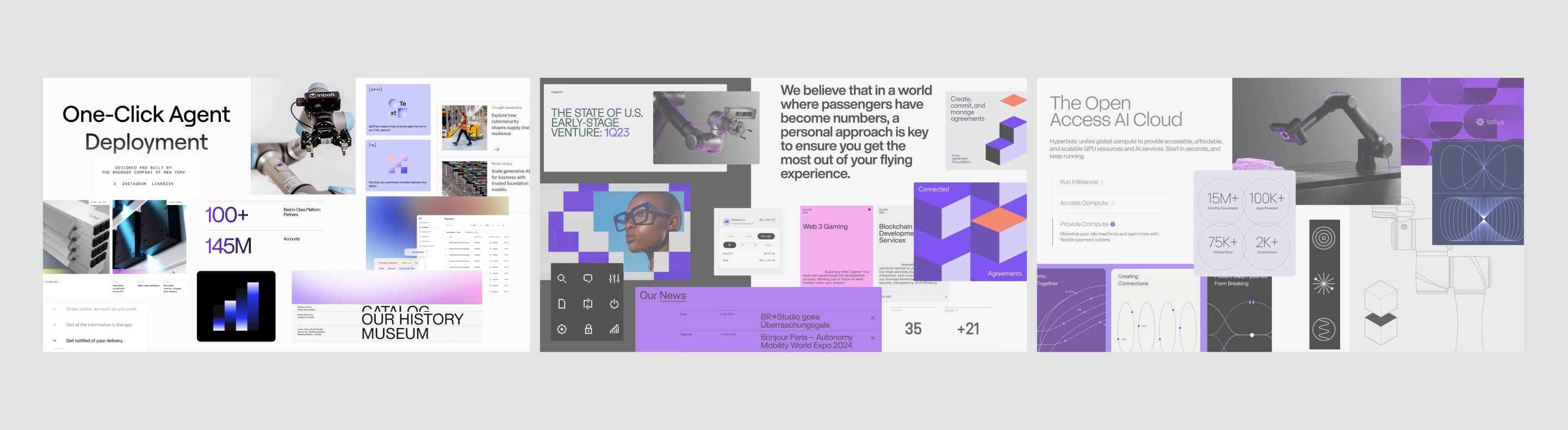
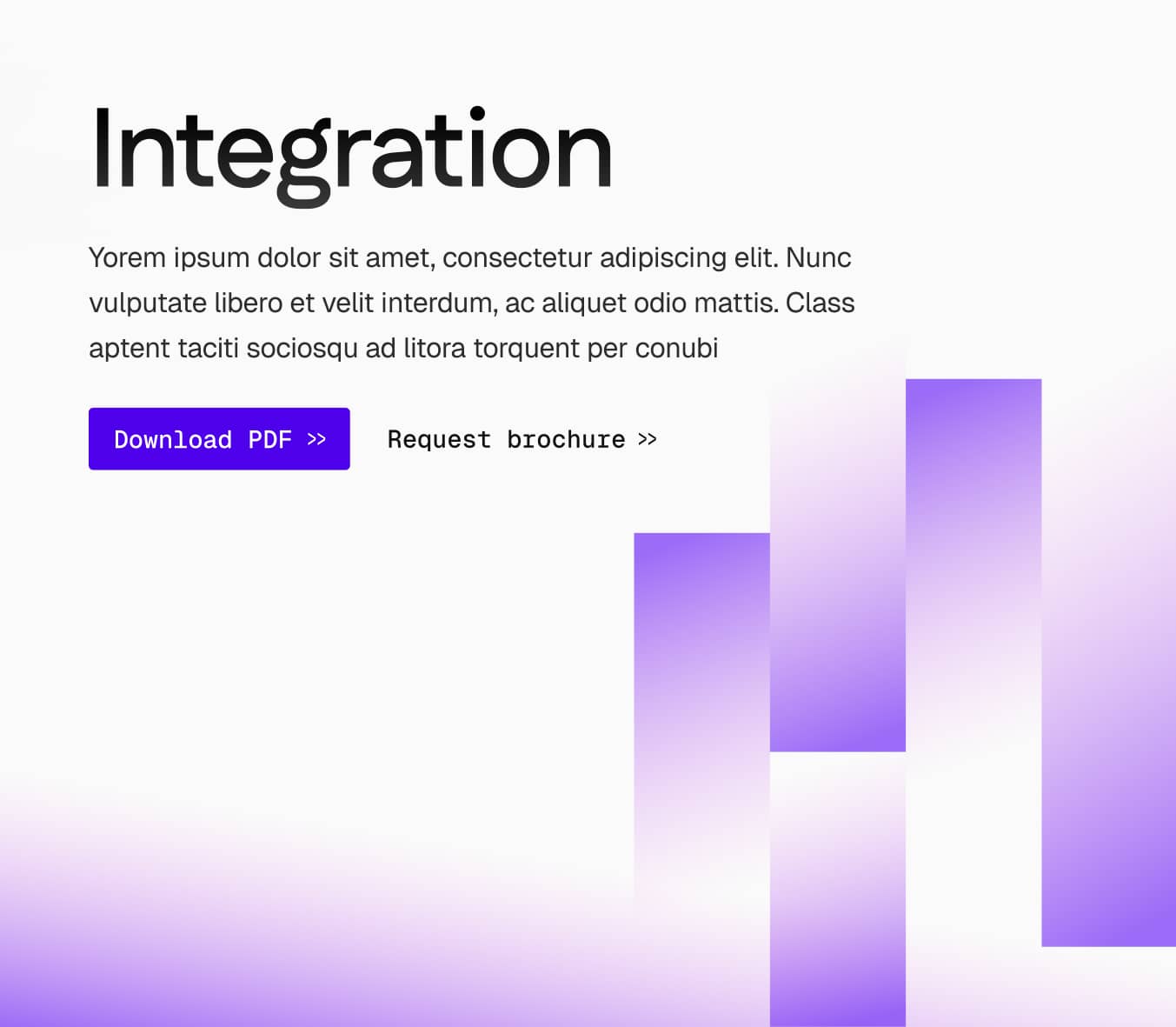
For visual direction, we developed moodboards that explored where the brand could go. The direction we landed on introduced several new elements on top of the existing color palette. A new typeface brings personality and a sense of technological precision that the previous typography didn't carry. Gradient overlays on dark backgrounds give the site depth and atmosphere while keeping the focus on product imagery. A subtle grid language runs through the design as a visual metaphor for Inbolt's core values: precision, structure, and systematic intelligence. The result is a brand that feels like it belongs on a factory floor and in a Series B pitch deck simultaneously.
Brand color is used as an accent throughout rather than a dominant presence, which was an intentional decision: Inbolt's product imagery and demo videos are the most compelling assets they have, and the design system was built to frame and elevate them rather than compete.
05
DESIGN SYSTEM & COMPONENT LIBRARY
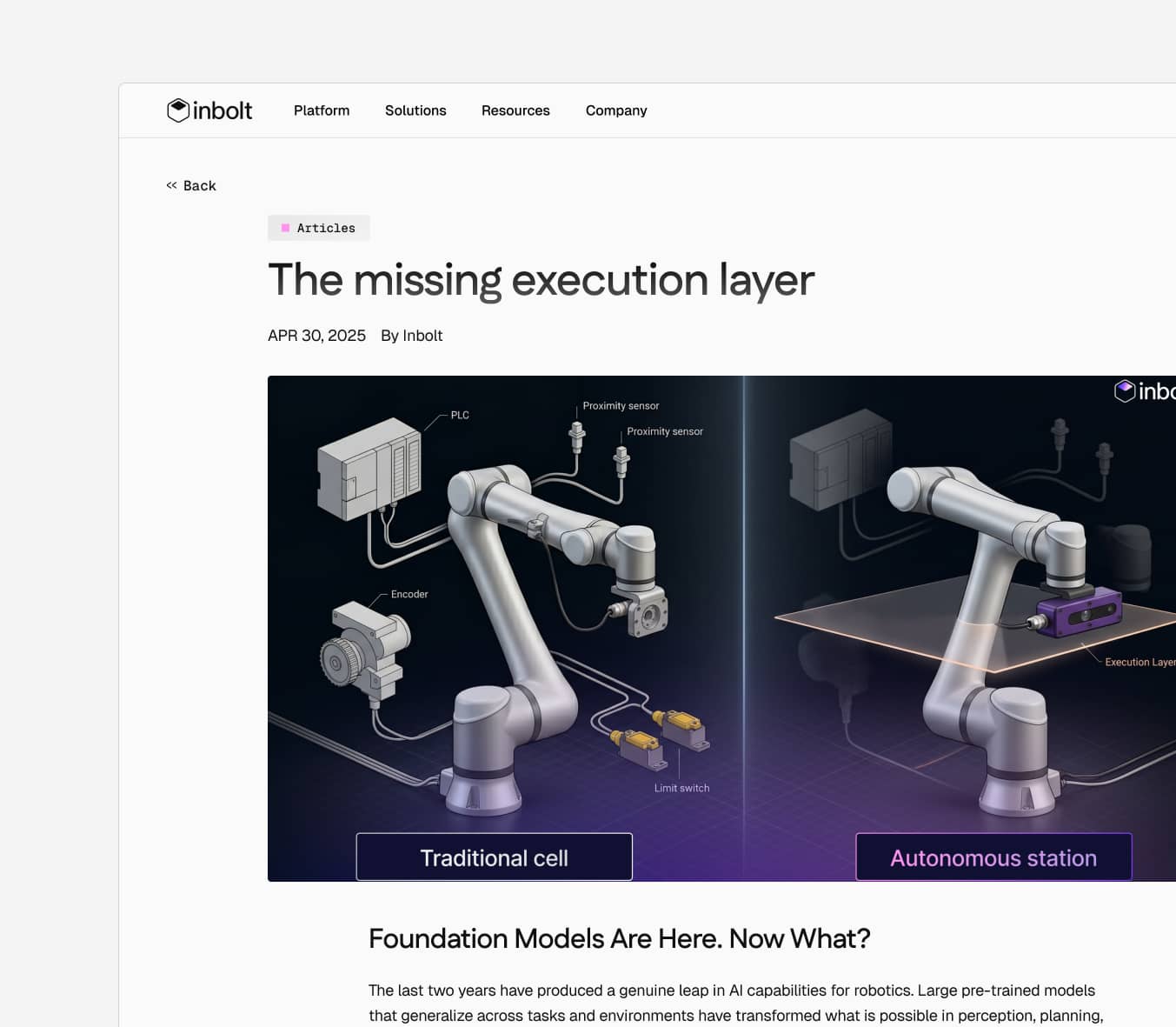
The component library for Inbolt is leaner than our larger enterprise engagements by design. The site architecture is focused and the visual language is restrained, so the system needed to be precise rather than exhaustive. Components are organized across Hero, Carousel, Features, Social Proof, Resources, CTA and Forms, Accordions, Video and Image, and Navigation and Footer, each documented with responsive variants.
05
TAKEAWAY & OUTCOMES
Inbolt is a reminder that great design for a technical product isn't about making complexity beautiful. It's about making precision legible. Every design decision on this site was in service of one goal: get the right person to the right proof point as quickly as possible, and let the product's real-world performance close the gap. The visual system gives Inbolt a presence that matches the ambition of what they're building. The rest is up to the robots.